The Issues with Adapting Tabletop RPGs to Videogames
Coming from an avid Videogame player, TRPG player and DM, and TRPG Game Producer.

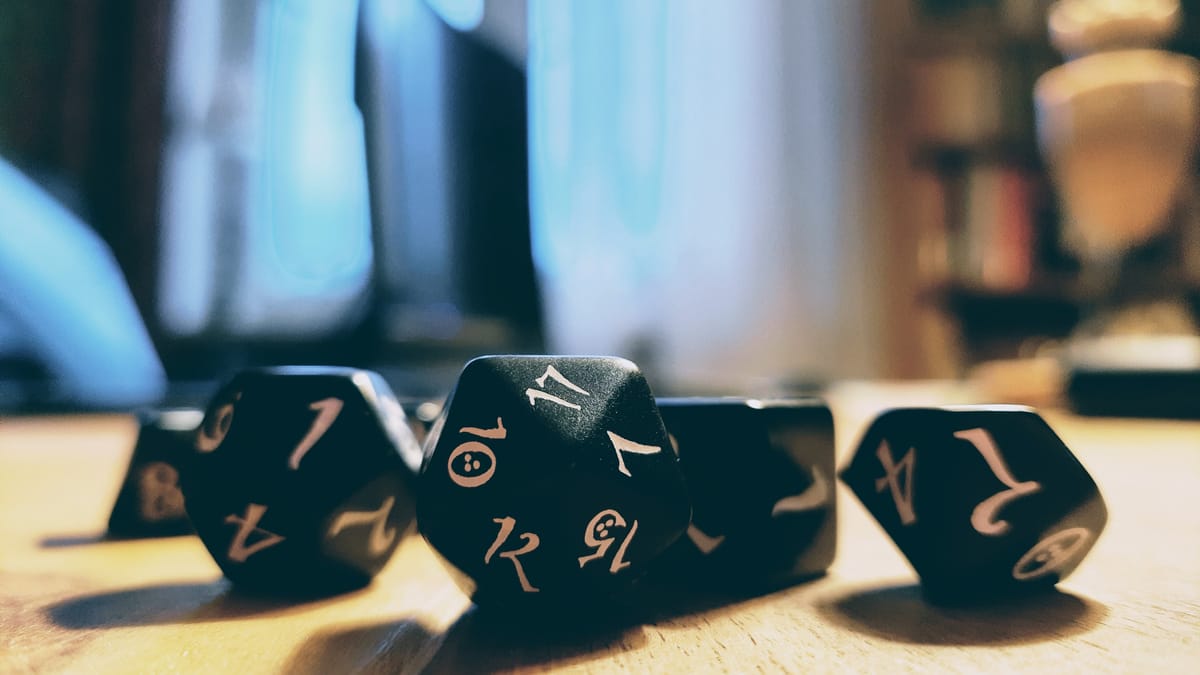
For those not in the know, I'm a TRPG (Tabletop Role Playing Game which DnD is an example of, only one T because Tabletop is one word) Producer with my partner at Just Roommates Games. We've made a couple games so far and are working on a sci-fi one that I'm building the world for. The development is going decently well, but, as my partner works full time, it can take a while. Because of that time and my partner doing research by reading sci-fi media, I've had a thing on my mind. Adaptation.
So today I'm doing something out of the ordinary for me, merging my two main areas of focus. Today I'm talking about TRPGs and videogames. I've had this frustration in my mind for a while where there's a lot of them that I think would make great videogames but there's this large difficulty with adapting them. Sure some games have done it well but I think most haven't. And those that have done some of it well often have large omissions that make the adaptation far worse.
Now with that, let’s talk about the biggest pitfall you can fall into with TRPG videogame adaptations, one success story, and one utter failure. And then we can talk about how I would recommend more people make the jump to videogames, using my knowledge as a TRPG Producer, a long time DM (Dungeon Master) with experience in a multitude of systems, my experience reviewing games on here, and my growing knowledge as a Videogame Developer. Let’s roll for initiative and get going!
Rolling with Disadvantage
There's a lot of common pitfalls but I'll just be covering what I consider to be the biggest. Specifically the fact that a TRPG and a videogame are different mediums, so they play differently. Thus, what might work well at the table won't work as well on the screen and with a controller. This usually comes from adhering to the rules in the worst possible way, by looking at all of them as dogma and following the Rules As Written (RAW) as opposed to what makes a more enjoyable experience.
Of course, for those not in the know, why is this such a problem exactly? What's wrong with using the normal rules. Put simply, it's because TRPGs are designed around being able to ignore some of the rules. At my table I've ignored both weight limits and ammo management because they're, quite frankly, annoying mechanics to have to deal with in a game that is supposed to be fun. Particularly weight limits. These are called House Rules (which I'm sure you've dealt with in your own travels with many other games from Monopoly to Uno) and I do it because my focus is on the smoothness of the experience, not on adhering to what the books say. This even applies to the games I've been a Producer on and the one I'm currently helping our main designer create (filling the role of a TRPG designer for the first time).
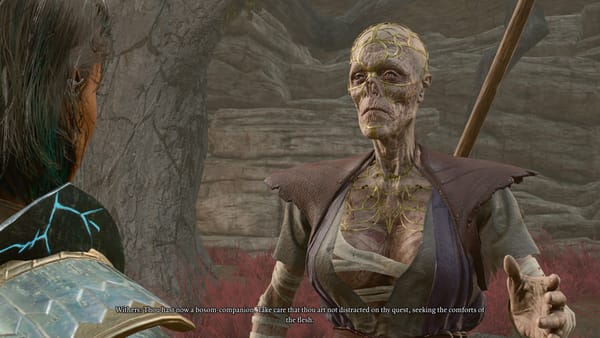
So let's look at how Baldur's Gate 3 (a game many consider to be the best ever adaptation of DnD) falls into this pitfall with how it deals with death saves. Death Saves are where, in the rules, you'll go down and then roll a d20 each turn, if you succeed 3 times then you're "stable" and unconscious so not at threat of dying. If you fail 3 times then you die. But here's the thing, a fuck ton of tables don't do it like that. Instead, we make things smoother so that players don't feel like, after succeeding on death saves they're just sitting there. Specifically, on 3 successes you are up and back in the fight with 1 hp. Now you have a chance to, for instance, make an attack on the enemy that turns the tide of the battle. It's positive for the players and makes them feel like the death saves are more impactful, as opposed to just not dying. Succeeding can actually have a positive effect, it's an awesome feeling. Well, in Baldur's Gate 3 it runs things RAW (sort of but that's another thing) and that leads to moments of frustration, like where you have 3 of your teammates down and they're all doing death saves and you're getting ganged up on. If they had a House Rules setting for specific commonly changed rules this would be gone but right now, it feels so defeating to not be able to make a big comeback. At that point, as has happened during my recent playthrough, you just reload.
So the biggest pitfall would be adhering to the rules too much, causing frustration and being more punishing to the players than is necessary. This would be the perfect time for the devs to say "fuck the rules as they were written, this sucks as a limitation and we should change it". Of course, with Baldur's Gate 3, I wouldn't be surprised if there was a limitation there with Wizards insisting on adhering to the rules for a lot of things, but it just kinda sucks and is not at all fun to have to reload when you shouldn't have to.
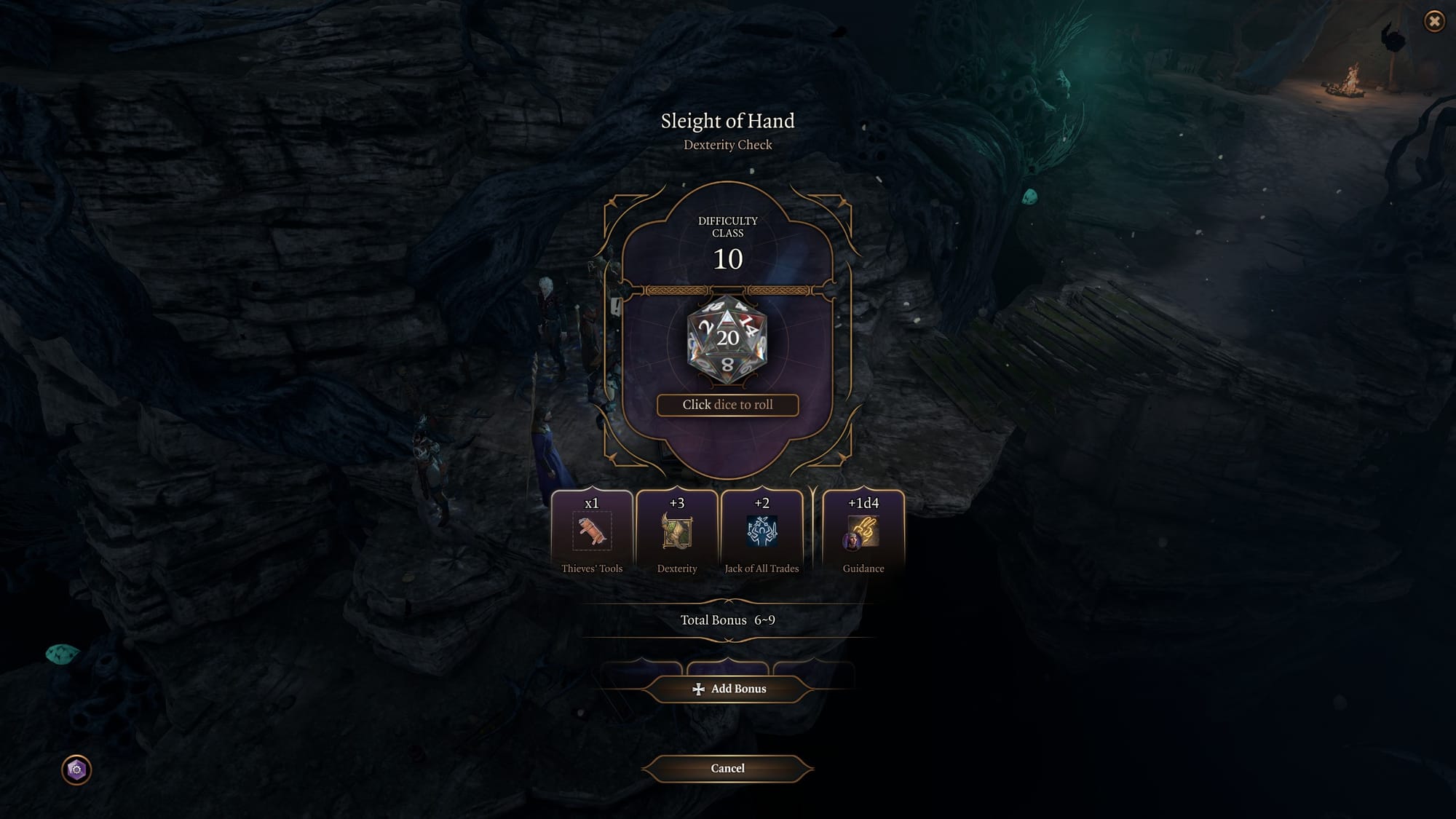
Staying on the topic of Baldur's Gate 3, I also want to talk about something that it does that is also a pitfall which is choosing to not adhere to the rules to make a more difficult game. For instance, in DnD 5th edition RAW (I looked this up) rolling a 1 is only an automatic fail inside of combat or with death saves and doesn't have any special consequence outside of those situations. You could theoretically need to get a 10 on a persuasion check to convince the monk that you, a half orc barbarian who is covered in blood and has the head of a goblin hanging from your belt, are supposed to be at the monastery and then roll a 1 but, since you have a bonus of 9 that you add to it, boom, you succeed. But in Baldur's Gate 3? If you roll a 1 you will automatically fail, regardless of you being in or out of combat. You could have a bonus of 15 and have to get a 10 and then when you roll a 1 you fail. It. Fucking. Sucks. This is likely some kind of decision to make failure at all possible outside of combat when you can add so many bonuses to your roll, a way to balance it. But there's a difference between balance for the smoothness of the game and balance to make it more difficult.
This is at the core of adapting a TRPG to a videogame format. You have to define which rules you will follow and which you won't and then just take it from there. While, in a game like Divinity Original Sin 2, you play just as deep a game but it is far more sensical with how the rules work because it can define its own rules and not have to be compared to the rules of the base game that exist outside of the videogame.
Nat 1s
Okay let's look at a game that I think is, broadly, a failure of an adaptation of a TRPG system. It's one that I've talked about before and, if you've read my criticisms of it then you might think I have a vendetta against it, but I don't. Of course I am talking about Star Wars: Knights of the Old Republic 1 and 2. These games have fantastic storytelling and a wonderful story filled with interesting characters and well written dialogue for the excellent voice actors to absolutely nail.
The combat though, is still pretty damn frustrating. Not because of camera angles or even the pause and play combat, it all has to do with the dice rolls. KOTOR is an adaptation of a d20 system, much like Baldur's Gate is, and that means you're dealing with the exact same RNG (technically means Random Number Generator but has been used to essentially describe how some things in game aren't designed with purpose and instead are simply random chance, like whether you get a 14 on that d20 roll to hit) as those systems are known for. So you will often end up attacking someone and have the attack "connect" where you hear the sound of it hitting only for it to miss. And miss. And miss again. The way they adapted this system just sucked and doesn't make sense when I can literally see the weapons connect, how could I possibly be missing?
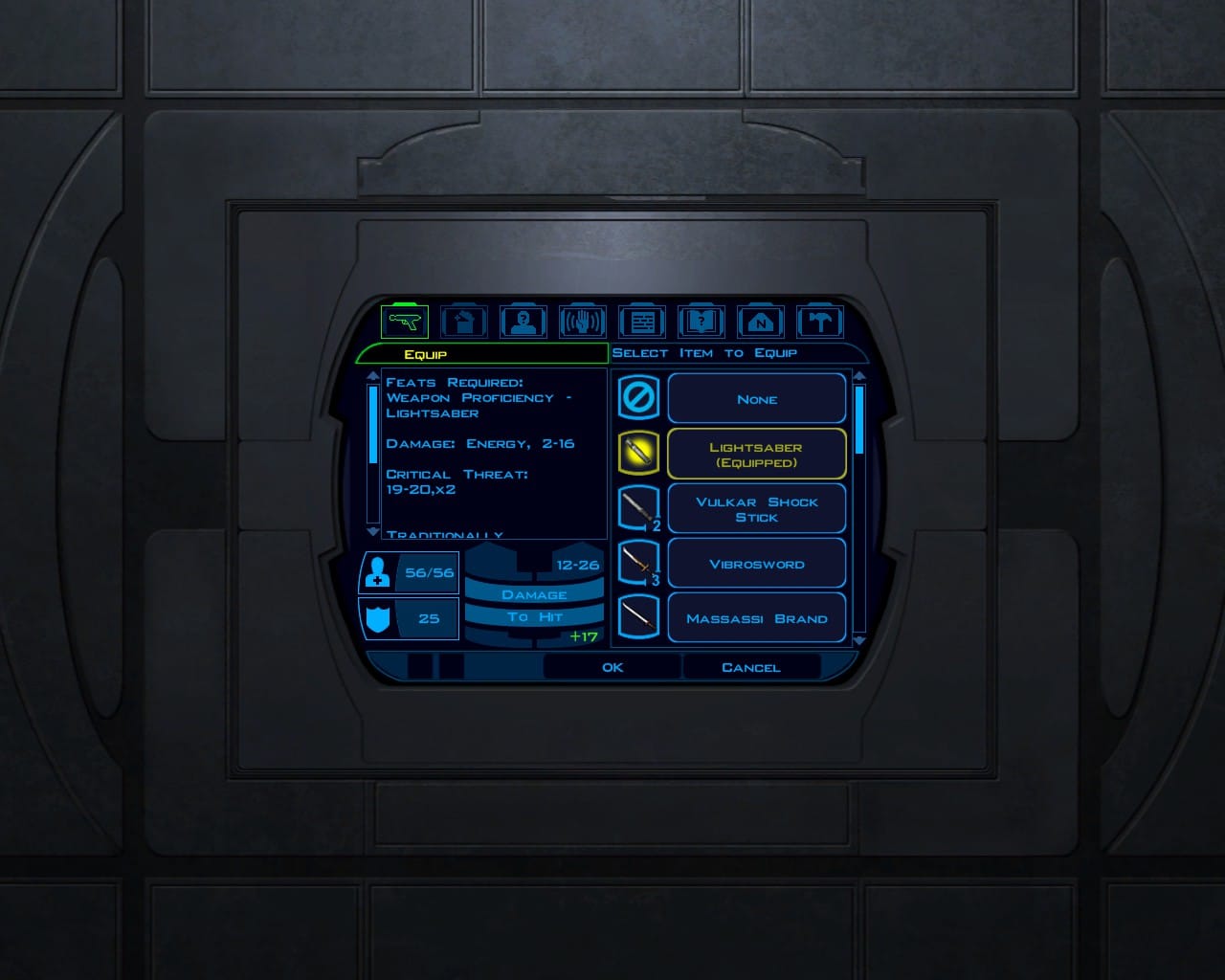
But the thing is, the game wasn't always the third person angle it is now. It originally started exactly like Bioware's prior games at the time, isometric just like Baldur's Gate 1 and 2. From that angle it makes sense to have the rolls happen and to miss sometimes because, well, it was the early 2000s and from an isometric angle you can't make out enough to see the weapons actually connect. When the perspective changed the combat should have changed too...yet it didn't. So because of that it became the absolute worst experience I have had playing an adaptation of a d20 system. Are there ways to make your attacks hit more often with armor and upgrades? Yeah, of course, but with this camera angle nothing will make it feel good to see the weapons connect, hear them connect, and then get a miss. While this wasn't an exact adaptation of one of the Star Wars TRPGs, it was still an adaptation of the structure of the system with some differences.
Also, I still love those games, they're something special and deserve to be played, but the combat is still just...shit. Take away the RNG nature of it and it's great, my hope is the remake that is supposedly still in development modernizes the gameplay while keeping what made the game really memorable, the story and world and just general experience as opposed to the combat.
Nat 20s
Interestingly, I don't personally think Baldur's Gate 3 is the best adaptation of a TRPG system. I mean, it's great of course, but I think this honor falls on another game that I've only written about once in my Finding Comfort in Non-cozy games (see here). The game takes the best parts of the system and drops the stuff that just doesn't work in a videogame as opposed to at the table. Cyberpunk 2077 is the best adaptation of a TRPG system, just flat out.
The game I'm making has some Cyberpunk elements so I've been aware of a lot of the aspects of that system for a bit, but first, the core of TRPGs is about playing a character in a specific world. In the actual Cyberpunk game you roll a d10 instead of a d20 and have a lot of skills and things that 2077 absolutely drops. But they both have what is fundamental to the experience. Over corporatized tech augs in a world torn apart by militarized corps. In both you're able to absolutely chrome yourself up and it's awesome.
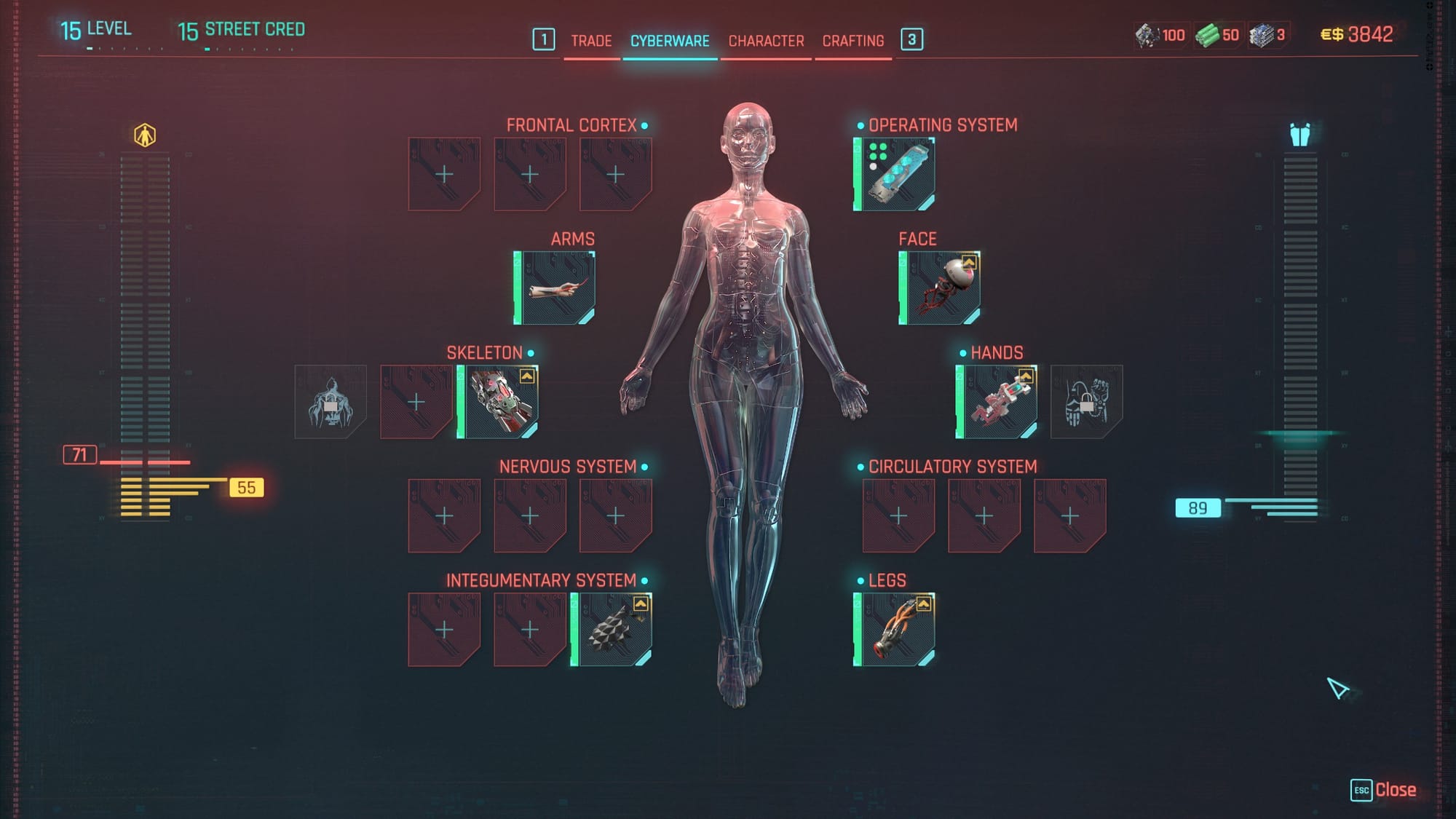
Not only that, you're also able to pick the builds you have in both and use those builds to solve problems you come across. I, of course, realize this is just how RPGs work but that's kinda my point. 2077 is aware of how the game works to a very minute level and is able to drop the things that don't matter to make a better game, largely because the creator of the system was integral to the development of 2077. In the TRPG system you have to roll to see if you hit, like all TRPGs do. Imagine how horrible that would feel in a first person shooter. That's the core part of my point in this article, game feel matters more than some nebulous rules that, at the end of the day, really don't matter.
I mean, existing in Night City is a wonderful time in Cyberpunk 2077 and the ability for CD Projekt Red to have restraint, to let go of rules and adhere more to the world and feeling of playing the game was genuinely one of the best parts of the game. When I went and read up on Cyberpunk Red I knew what the world and game was meant to embody. The best adaptations don't perfectly replicate the feeling of playing at a table, they replicate the feelings the game evokes when you play at the table. Cyberpunk 2077 does that perfectly.
Recommendations
I think my biggest recommendation is to just not be too constrained by the pre-established rules and game. The job of a TRPG developer is to create a system and world for DMs to guide their table of players through. That DM is somewhat on the players side, they are a thinking and feeling person who can and will react differently depending on the situation and, sometimes, how their day has gone. Sometimes this is giving the players a break if they've rolled horribly all damn night to the point where they're wanting to sage the house they are playing in and something it's liking an idea the player has so much that you are willing to say fuck it and let them do it anyway because you think it will be cool and fun. The DM is a fundamental part of the TRPG experience and they can make the game go from unbearable to absolutely fucking fantastic.
But, a videogame isn't like that. A videogame is cold and calculated and doesn't care the type of day you have had or the type of friendship you have with it or the cool idea you might have (like if you plan to kill an authoritarian leader of a Druid camp who everyone seems to hate and instead of them being grateful for your overthrow of their leader, they decide to kill you because it's a videogame and it won't adjust to this cool idea). A videogame will punch you in the gut and cause you to die over and over just because that's what was decided upon by the rules. Rules that the DM could bend.
It's also important to think of the type of game feel you want to have before you decide what rules to drop. So with Baldur's Gate 3 it makes sense to have the miss and hit system still intact because of the perspective but with KOTOR it doesn't. You, as a developer, have to remember that what perspective your game is at will absolutely influence how the game feels to play and the type of rules that need to be dropped and what can still be included.
So yeah, my recommendation is to just be flexible, try not to feel too tied down by the rules already defined for the system. Remind yourself that what matters more isn't about adapting the rules exactly and is about making a game that feels good and consistent to play. Also, maybe check with a bunch of different groups for whatever TRPG you are adapting to see what rules are more often dropped or gotten rid of with House Rules, and then if they are gotten rid of incredibly often, maybe add a setting for House Rules. Because seriously, TRPGs are designed to still feel good even if you drop a couple rules, so let that be the same for the game you're developing, don't just leave it up to the modders to release days after the game comes out.
The Conclusion
Honestly, I adore playing TRPGs. I've been a DM for 3 and a half years now, we've gone through multiple systems and played a multitude of different adventures and during that time I've seen how players react to these different rules that I've talked about here. I've seen them love some of them and hate others. When I work with my team at Just Roommates Games I use those experiences to inform my opinions on the games we develop and try to let the main designer know that I, as a DM who has issues with some of the smaller rules they have created, will run a game without those rules and we should make sure the game still works well that way too (obviously this can only really be done with the smaller rules, if we dropped larger stuff then that's more influential on the game feel and how it all fits together but I'm not here to talk about the intricacies of designing TRPGs and how some rules are more impactful than others).
I think if more Videogame developers were willing to piss off the fanbase of different TRPGs that might also help as making a lot of the changes I am suggesting will undoubtedly bother a lot of people. Even me talking about bending the rules or fudging some rolls at my table will ruffle some feathers. But a videogame is a different type of experience from a TRPG. They have different strengths and weaknesses. We shouldn't try to pretend they're the same, we should be willing to make changes between them so they play more fluidly. Game developers who are adapting these systems should aim to make a game that lets you feel like you're playing your character at the table, not like you're playing yourself playing your character at the table.
Meow,
Cat