Take Off Your Rose Colored Glasses
Nostalgia is something we all deal with, but it can actively mess with our perception of what makes a good game and how modern games...well...are.


Okay it's time for some really controversial takes about older games. Some I've gone over before, others I've mildly touched on, and then a few I haven't even mentioned until now. But hey, sometimes you need to take off those Rose Colored Glasses to see all the flaws that exist in something. Even if it doesn't take away your love for a game, perspective is key, something I've learned a lot in my time as a TTRPG Producer.
First let's start with something easy.
Game Genres Change and that's okay.
something I've found a lot in the gaming community recently are people nitpicking about what constitutes a certain genre. Specifically, I've seen people concentrate on RPGs. They say recent games like Avowed (review here) and Dragon Age: The Veilguard aren't RPGs because they're too actiony, or the story always ends in the same place, or the writing of the world isn't as detailed as they want, or the games don't simulate NPCs having lives, or that you don't face as many repercussions for decisions like stealing something (since you literally can't in Avowed).
RPGs are one of the oldest genres of games and they've changed drastically from where they've started but they're all based on or inspired by the experience of playing DnD with your friends. Again, I'm a TTRPG (Table Top Role Playing Game) producer so I think I have a unique perspective on this. TTRPGs are not a monolith. some are more dungeon focused while others are more story oriented, others are about playing cooperatively with your whole table without a DM at all, and others are just about having fun. They each have a variety of mechanics with varying levels of depth. But all of them are RPGs. it doesn't matter the variance, because RPGs aren't always the same.
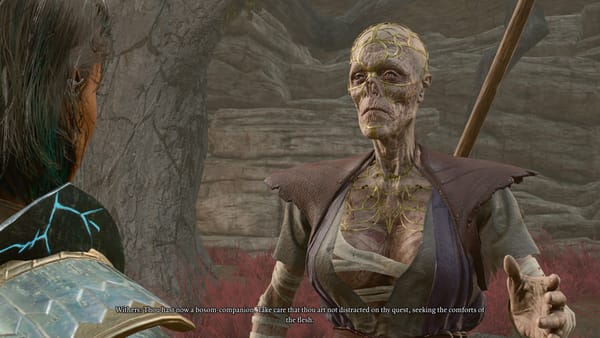
This is my basis with RPGs in videogames, they have changed as a genre, become more open and allowed for more variance. Cyberpunk 2077, Final Fantasy 16, Avowed, Dragon Age: The Veilguard, Baldur's Gate 3, Mass Effect 1-3 & Andromeda, they're all RPGs.
So why do some people focus on being so stingy about what constitutes an RPG? Well, as is the theme of this article, it's all about Nostalgia. Everyone experiences it. It sometimes drives us to make horrible decisions to try and rekindle that feeling. Other times it makes us think there's only one way for things to be. People who believe RPGs are a very strict definition think that because they played games when they were younger that fit that idea of what an RPG is.
But are older RPGs somehow deeper than all modern ones? Not really. Let's look at Final Fantasy 7 as an example. Many people critique modern RPGs saying there's not enough choice and story impacting decisions in the games but back in the 90s FF7 was an RPG but it's story was fixed. You could never save Aerith and you always had to face Sephiroth at the end. You didn't have any choice. You also couldn't make your own character or make decisions on the kind of Cloud you wanted to be. But FF7 is still an RPG. By the standards of the people I'm talking about, it would be an action game. A turn based one but still.

Usually the games people focus on as the only really true RPGs are the CRPGs of the past. Games like Fallout, Wasteland, Baldur's Gate 1 & 2, Neverwinter Nights. These games were unique and provided that choice, but they weren't the only RPGs that existed. They didn't define the genre, they simply rounded out a sub-genre.
Nostalgia makes these people view modern games through this Rose Colored lens that makes all of the different aspects of them look bad. But they're not bad. They're just different and show the genre has kept developing in the last couple decades of its existence. Change is a good thing, getting stuck in your view of Nostalgia opinions being the end all be all is really bad.
Many beloved old games are kinda shit in at least one aspect.
Okay, I don't mean this as a way of saying all old games are shit. I simply mean that they are, arguably, filled with shitty elements. This can mean anything from shitty gameplay to shitty story parts. It can mean a lot so let's get into a couple of examples so it's more obvious.
First, I want to go over a game that I reviewed earlier this year, Psychonauts (review here). You can read my review for a more in depth account of what it felt like playing this game in the modern day but I'll give you a quick rundown of the most influential issue here in case you already read it and want a reminder, or are already so frustrated with what I'm saying that you want to keep angrily reading and don't want to get distracted with another article. Essentially, the game is a product of the time where it had been made with the inexperience of developers in a 3D platformer environment. This lead to a lot, and I mean a lot, of camera issues. Now this wasn't as frustrating back then because so many of the games in the 3D platformer space at the time were still frustrating when it came to cameras. But this experience is something that nowadays we can look back on with the understanding that the camera in it was trash. We shouldn't say "I loved it when I played it and had no issues so I think you judging it's camera from a modern lens is inherently disrespectful". Psychonauts lead to an amazing sequel that I adored (review here) but this one had a shit camera. Look on it how it is, not how it was, not how you think it was when you were young, look on it how it is to play now.
Next I want to talk about one of the games that I once said was my most favorite game ever. Star Wars: Knights of the Old Republic is a truly amazing game with an experience that hadn't been matched in the Star War Universe at the time. But when you go back and play the game you see some glaring obvious flaws. Specifically, one that really jumps out at you as it is fundamental to the game as a whole and is entirely shit. The Combat in KotOR is just absolute trash. I talked about this very early on in my time writing when I reviewed Star Wars: Outlaws (review here but be aware my review structure is very different since it was my first ever review). Basically, I find it exhausting that you can be fighting an enemy, hear the sound of your weapons connecting, see them literally connect, and still miss. But then it gets worse because this can happen over and over and over and over and over again. I once went over 10 times not hitting an enemy. Not 10 attacks in a flurry animation, 10 actual attacks. This fucking sucks. It's because the game is an adaptation of a D20 TTRPG (Table Top Role Playing Game) system but that shit doesn't belong in the action-y like combat of a Star Wars game, or at least not this kind. The problem was that when you roll a D20 against a machine, it has no bias towards you and will be as brutal as can be. If you have failed 10 times prior then oh well, you will fail again. It won't give you inspiration to re-roll or add something extra to it so you make it. It won't fudge a roll (this is a very controversial thing but I fudge rolls as a DM so that my players don't get the experience that KotOR puts out). There isn't a system where the more times you miss you'll be more likely to hit the next time. It's just, overall, a system designed for the Table not for the videogame. The game is an amazing experience but the combat is just absolute shit.

Both of these games can be fun, even are fun, they each have their redeeming qualities. But they are also looked at with Rose Colored Glasses with people viewing them not how they are now but how they were then. We, as people, have this tendency to only look at things from context of the time period but I believe that is doing a disservice to whatever we are looking at. Nostalgia for the past is natural, everyone experiences it, but we are also not there anymore and it's okay to rejudge things for what they are with more context about what makes a good experience. This is at the core of my argument. That Nostalgia is ruining how we view older games causing us to look at them as if they are inherently better than modern games. As if everything back then was better. When in reality...well...that's the next section.
If they released today they'd be hated.
There's a lot that can be said about this topic but it fundamentally goes back to how I believe that a lot of beloved games would be hated, maybe even reviled, if they came out today. This wouldn't mean they are bad games, far from it. I believe these games would still be great games, just that modern ideas of what makes a good game have changed massively in the prevailing years since the original release.
For instance, let's look at 2 of 3 games in a trilogy, Mass Effect 1 & 2. Now, I am sure you are wondering as you sit there sitting on your couch or chair or wherever you read this, how would these 2 wonderful games be hated so much? To answer that thoughtful question, let's examine them one by one (because there's only 2).
Mass Effect 1. A game that was a big, big change for Bioware where they made their first move into the action space (no pun intended) for their RPG games. ME1 was an RPG that was a third person shooter, something that was rare and unusual at the time. But with this came a lot of cutting back on older RPG elements. There was no longer the same level of tactical-ness to the game, sure you could order your teammates around a bit but you only had 2 of them and they were much less useful than in prior Bioware games. The choices were also influential but they didn't change any of the narrative overall, something that many, many people disliked back then and if released now people would pan the game for the choices you make only impacting a few aspects as opposed to the narrative as a whole. You still faced Saren, you still couldn't join him as you were the hero of the Galaxy, you still destroyed Sovereign. A lot of the idea behind the decisions you make not impacting the narrative as a whole much was looked past as there was this tease that all of those decisions would carry over to the sequel and you could continue your unique story from there. But overall, if released today, the game would likely have many haters talking about how pointless the decisions were, about how boring the companions were because they had nothing to really contribute besides back at the Normandy. They would talk about how much of a let down it was that the RPG elements were so watered down compared to prior Bioware games (Baldur's Gate 1 and 2 mainly). The game would not be as loved as it is now.
And then there's Mass Effect 2. The sequel that took a lot of the decisions you made in the first one and kinda made them irrelevant. Not only that, it watered down the RPG elements even more so. So much that even today you will have people say they haven't liked a Bioware game since Dragon Age: Origins (since Mass Effect 2 came out the next year). Mass Effect 2 featured this fantastic experience where you went around the galaxy as a now not dead Shepard collecting a team of specialists to take a fight to the Collectors who were abducting Human settlements. Not only would this game be panned as incredibly watered down for an RPG, as making the imported decisions pointless, it would also be looked at as the characters' loyalty missions being annoying that you have to complete them to be able to get the best ending. Don't believe me? That's exactly what happened with Dragon Age: The Veilguard which turned up the Loyalty mission concept to 11 and fucking nailed it in my view. Which I talk about in my review here and my In Defense of Dragon Age: The Veilguard Article here. Plus it would be looked at as this dumb side quest that is barely connected to the overarching plot of the Reapers being right around the corner (whether or not this was true would be irrelevant). Put simply, while Mass Effect 2 is an amazing game, modern audiences would have serious issues with it.
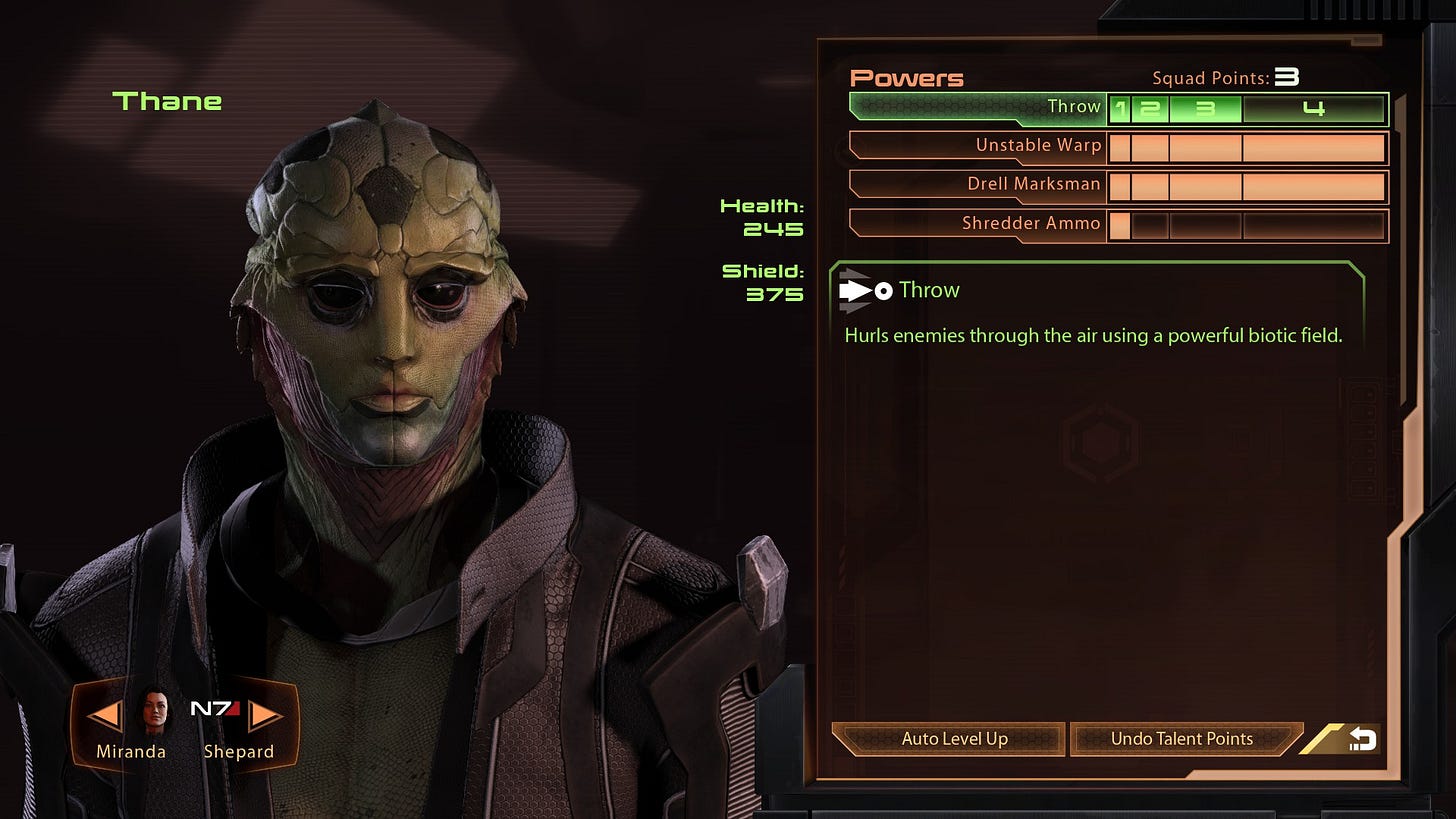
Of course both of these would have more issues from just the individual ones to the game, like how the Paragon/Renegade system makes it so playing a more morally gray character is utterly pointless. How the characters are often written in a way that a lot of people would absolutely hate (the amount of vitriol that would be thrown at characters for being able to experience happiness even during all of the shit going on around them would be crazy) especially considering that there is, in fact, a decent amount of quips in the games that in modern days means your game is written like a Marvel movie.
Overall though what I mean is that great games from the past, even if they are still great and don't have issues, would be looked on so much more differently if they had been released in the modern day. The Rose Colored Glasses are strong in that people look back on them as if they were so much better than other games that are being released now, but in reality they are games that are simply being viewed with Nostalgia, like all the other games I have been talking about. Nostalgia means these games are far better than any that have released now, but it's wrong, and we should try to remember that sometimes Rose Colored glasses make us see colors that aren't accurate.
Games have never been perfect.
This is genuinely something that bothers me both as a member of the gaming community and a game reviewer. Games are not and have never been perfect. Give me a game and I can find flaws in it that make it not perfect.
Ocarina of Time? Nope, not only is the camera system outdated but it is also just plain frustrating when you have small spaces. And don't even get me started on the annoying-ness that is the Water Temple.
Red Dead Redemption 2? Fuck no, it might have amazing detail and design but if you can tell me that you loved that every time you skinned an animal it would play the exact same incredibly long animation every single time then I have a bridge to sell you. The game is designed around Realism but I think that's its biggest flaw. Sometimes you just want the animal skinned. This is something that the Far Cry games have fallen under criticism for in the past with having a skinning animation for animals but all of a sudden it's good in Red Dead 2 because it's a Rockstar game? Nah, that's a flaw and it's not a perfect game.
Tears of the Kingdom? This one is easy and I've touched on this multiple times before but the fact that you have to grind to be able to get enough of a charge so that your creations are at all useful for prolonged periods is such a jarring flaw that keeps you from being able to fully engage with the mechanic. Case in point, all of the duplicating glitches that happened soon after release and how so many people used those to get around the required grinding. Add in the fact that the enemies hit like a truck right from the outset, almost as if they hit for just as much damage as they were doing at the end of Breath of the Wild, and you have a good game, but a flawed one that is far from perfect.
Baldur's Gate 3? Nope. Not only are some of the questlines boring earlier in the game but the game only really sticks the landing in some of the endings. Act 3, the part that didn't have the benefit of being in Early Access for a very long time, was the most flawed part of the entire game. It had a lot of moments that just felt underwhelming because of that and, overall, is an amazing game but still very flawed.
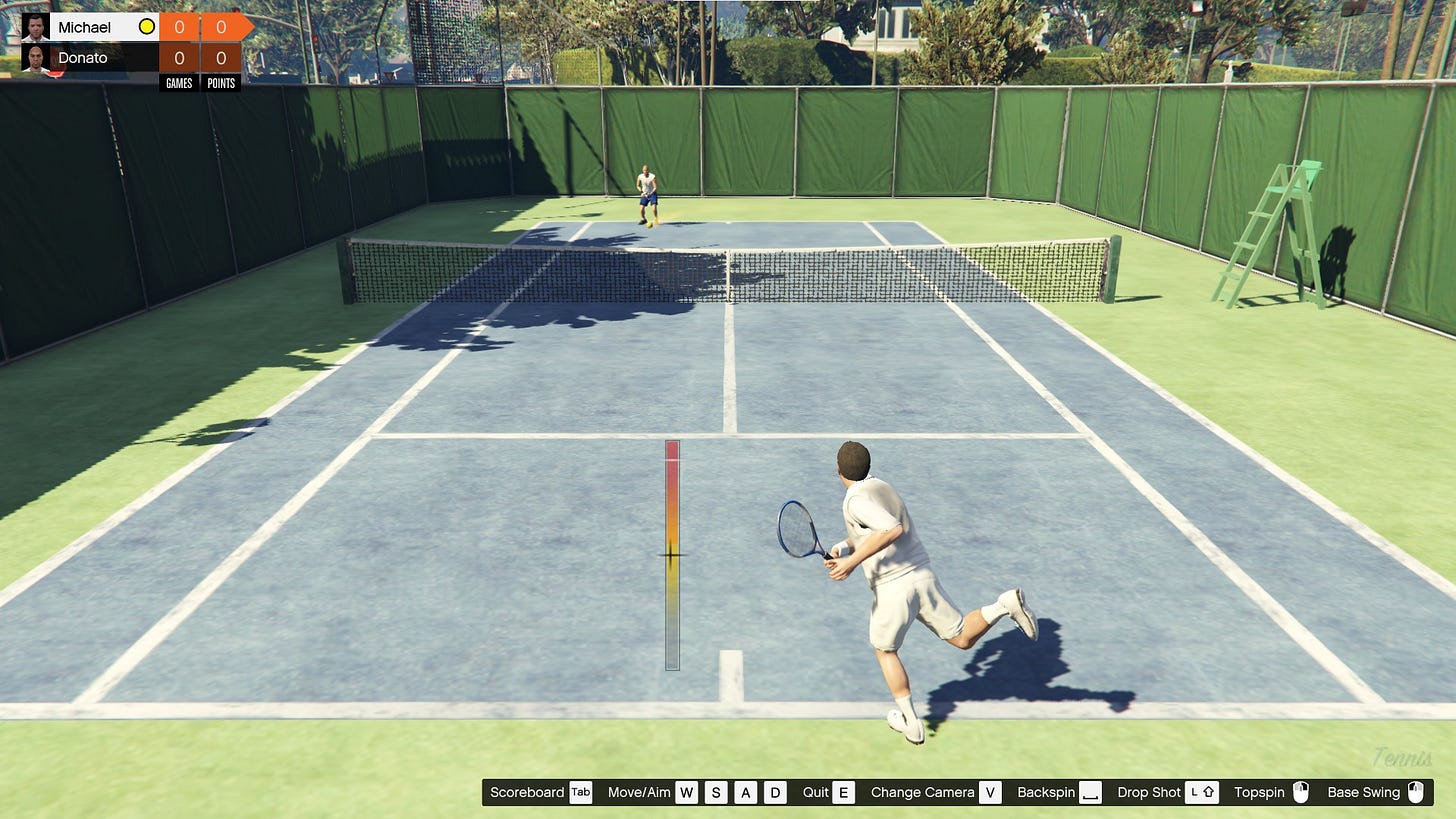
GTA 5? Seriously? Not only is the game so fucking massive that the process of going from the top to the bottom of the map is just overall boring, the game feels incredibly shallow in side content. Add in that the game was set up for an expansion that never came about because of the success of GTA Online and you have a flawed game.
Skyrim or Oblivion? They suffer from the quintessential Bethesda problem, wide as an ocean and as deep as a kiddie pool.
I could go on and on with these but the point isn't that any of these are horrible, or even bad, games. My point is that perfect is literally impossible. This is something that has bothered me time and again with so many of the ratings systems out there, which I have talked about before (most recently in my Innovation is Overrated article from a couple weeks ago). I don't want games to be perfect. I want them to be flawed. I don't believe Masterpieces exist, only flawed amazing experiences exist. To call something perfect or a Masterpiece has this implication that there are no flaws and I think that's the problem. Older games, newer games, all games have their flaws. We shouldn't call new games with some flaws horrible games and same with the old ones. Focus on the experience overall, on the emotions you feel, not about whether or not it is perfect. It's not all or nothing.
The Conclusion
Well with that rant done, I think I can safely say that I have pissed at least one person off. But that's good. See, we need to have our Nostalgia for the past pointed out. We need to be reminded that we are viewing things inaccurately or that the things we loved back in the day had a really shitty aspect to it that we shouldn't ignore for the sake of the past. We should be reminded that many older, but still arguably more modern, games would be hated if they were released today because we look back on them and the time period with Nostalgia that games were just better back then. That the writing, the gameplay, the design, the very concepts themselves were better back then despite the reality that, no, they weren't. We haven't had a drastic shift as Nostalgia might lead people to believe. In reality, those games that you might hold on a pedestal would be hated today because how we view things is through Rose Colored Glasses.
More so, we need, as people who play games, to always remember that no game can be perfect. That playing games isn't an all or nothing when it comes to whether a game is great. That some flaws don't mean a game is horrible. That we don't have to hype up older games that we loved as Masterpieces of Perfection all because of Nostalgia, that they can be flawed and even kinda shit and we can still love them because we had a good time with them. That playing games isn't about looking for perfection but about looking for a fun experience. That's what matters. Perfectionism is something that I struggle with myself and the only way I have been able to fight against it is being reminded of it.
So yeah. Try to take off those Rose Colored Glasses. Remember Nostalgia is a normal thing to experience but there's a fundamental reality to it as well, it's wrong. Nostalgia is a lie and you shouldn't believe it, try to remind yourself of that whenever applicable.
Meow,
Cat